Feeds:
Posts
Comments

Awhile back I added Esquire’s Chris Jones to my collection of writers and their origin stories. I got the story of Jones’ big break from his blog, which turns out to be kind of a gold mine for people – like me – who like to geek out on other writers talking about their writing.

Are you one of those people, too? Check these posts out:

How It Begins includes the actual email exchange that led to Jones landing the assignment for The Things That Carried Him, a 2009 National Magazine Award winner for feature writing.

Losing’s Reward is a brutally honest post about Jones’ Roger Ebert profile missing out on the National Magazine Award nominations, and Fear is about, well, the fear and doubt that infect the writing process.

NO lists 20 things that “should rarely if ever appear anywhere near your copy.”

Bonus link: Jones’ Esquire colleague Scott Raab also posted some writing advice on his site awhile back. This is the meat of it:

Writers love to write — and not because it’s easy. Getting it right isn’t easy at all, and that challenge is a big part of why writers love to write. It’s a high, working on your game, a way of being in the world that feels absolutely honest and true.

Anyone, especially in his or her twenties, saying ‘I have no time to write’ because of a job or anything else is full of crap. Writers write. If you can’t find time to write, don’t worry about becoming a writer. You’re not a writer. You’ll never be a writer. Find something else that lights you up.

Same with reading. Anybody who has no time to read isn’t a writer. All the work necessary to learn how to write boils down to reading and writing. This is not subtle or nuanced advice, obviously. I stress it here because of how often I talk to people who seem to think there’s a shortcut. I know no shortcuts.

I was catching up on some back issues of Harper’s a few weeks back, and this quotation about the author of In Patagonia and The Songlines caught my eye:

He saved travel writing by changing its mandate: After Chatwin, the challenge was to find not originality of destination but originality of form.

Among those who have followed Chatwin, the most interesting have forged new forms specific to their chosen subjects: thus Pico Iyer’s sparkily hyperconnective studies of globalized culture and William Least Heat-Moon’s “deep maps” of America’s lost regions. Perhaps most important were W.G. Sebald’s enigmatic “prose fictions” — particularly Rings Of Saturn — that likewise hover between genres, make play with unreliability, and fold in on other forms: traveler’s tale, antiquarian digression, and memoir. What Sebald, like so many of us, learned from Chatwin was that the travelogue could voyage deeply in time rather than widely in space, and that the interior it explored need not be the heart of a place but the mind of the traveler.

(It’s from “Voyagers: The restless genius of Patrick Leigh Fermor and Bruce Chatwin,” by Robert Macfarlane, in the November 2011 issue.)

Big news! On Thursday I start a new, full-time job as an associate editor at Up Here and Up Here Business magazines.

It’s a temporary position, a ten-month maternity leave fill-in, and I’ll be spending part of that time at the head office in Yellowknife, NWT. (The rest of the time I’ll be working here in Whitehorse.) I’m excited to get to know a second northern Canadian city, and to work on a pair of magazines that I really admire. I also think it’s going to be kind of cool to work in actual office, with actual people, for a little while at least.

I’ll still be doing some limited freelancing on the side, and of course I’ll be continuing to chime in at World Hum. The job itself is going to be writing-intensive, so keep an eye out for my byline in both mags. (And you can get a head start with the latest issue of Up Here Business, which includes my profile of local mushing legend Frank Turner of Muktuk Adventures.)

I’ve got a new personal essay up over at Nerve.com:

True Stories: I Fell for a Fictional Character in My Own Play.

Check it out!

Hello from Dawson City, where I’m a week into a gig on the communications team for the Yukon Quest 1000-Mile International Sled Dog Race. I’ve been following the race from checkpoint to checkpoint (it started in Fairbanks and will end in Whitehorse), tweeting, updating Facebook, and writing news releases and short race updates for the Quest site.

Having trouble envisioning a 1000-mile dogsledding event? Here’s a fantastic video that my colleagues on the photo/video crew made at the start line:

I’ve written about the Quest before: I had a short essay in the October/November issue of Up Here magazine about my time at the Slaven’s Roadhouse dog drop station last year (unfortunately the piece is not online), and I also wrote my last Vela story about mushing and the Quest.

This is a favorite, much-kicked-around topic of mine, and earlier this week the good folks at The Rumpus added a fresh contribution to the debate.

Messing With Memoir is an essay about the author’s efforts to revise her out-of-print memoir, years after she’d written it, and the ethical issues she grappled with in doing so. Here’s a taste:

I was a much better writer now. Why let that raw, earnest, adverb-friendly, long-sentenced version of myself linger? With e-books and Print on Demand (POD) as a garrote, I could quietly, efficiently off her. In her place I would seat that wiser, more skilled self.

But was it ethical? I had never heard of anyone tampering with their memoir. A memoir is not only an account of your life, it is specifically an account of your remembrances of your life. So now I would be telling that same story fifteen years later. I was re-remembering a memory.

Even more important, a memoir is a reflection of who you are at the time of writing. But now I would be peering backwards at myself from a new vantage point. Isn’t there a different author (older, wiser me) now? And haven’t I now changed my main character by writing her with this new hand? Did this matter?

Touching on the same theme in one of his “Daily Rumpus” emails a few days back, editor Stephen Elliott wrote about “the only true rule of memoir”:

You cannot knowingly tell a lie. In other words, you can be wrong, you can write things you consider to be true that other people consider to be untrue. In fact, it’s impossible to do otherwise. Most truth is not factual; most truth is subjective. But to state a something as fact when you know it is not, ie. I spent this much time in jail, is to break the cardinal rule.

I think that gets it about right.

Sitka. Swoon.

I’m on a tour of Southeast Alaska by state ferry, drinking local beers, eating halibut, taking absurd quantities of photos. More to come when I get home.

I’ve written before about my habit of digging up the “origin stories” of writers I admire. This weekend, while procrastinating on a story rewrite that’s due on Monday, I fell down the internet rabbit hole (it started with a Twitter reference to a writer-on-writer feud, detoured through a bizarre story about a person in a pink gorilla suit crashing a Grantland recruitment meeting, and finally led me to a writer’s blog on writing) and came across a new one, by Esquire’s Chris Jones.

Jones first came on my radar with his incredible profile of Roger Ebert a couple years back. Here’s the story of how he got into journalism. It begins with a big-name former journalist – the Headmaster of his graduate school residence – taking note of his writing and setting him up with a job interview, and ends with Jones landing a gig as a sports writer at the then-brand new National Post.

(Incidentally, Jones started that job at almost the exact same time that I, a self-righteous 16 year-old, scrapped plans to go to journalism school because I didn’t want to work for Conrad Black, who then owned the Post and almost every other paper of note in Canada. By the time I finally circled back around to journalism in my mid-20s, Black was a convicted felon, newspapers were generally considered to be a dying breed, and Jones was a regular at Esquire.)

Continue Reading »

It’s been a mixed bag of a year for me, writing-wise. Though I did manage to keep my resolution to write more in 2011, I started out on a low note, fresh off the World Hum layoffs at Travel Channel last November. The American road trip blogging gig that fell apart in May was another pretty tough hit.

From June on, though, things started to look up. Jim, Mike and I announced that World Hum was back on its feet. I published an essay I’m still really happy with, Stilettos in Paris, and I attended the inaugural Oxford American Summit for Ambitious Writers (look, ma, I’m ambitious!), and spent an inspiring few days in Arkansas, meeting other writers, eating bacon and plotting world literary domination.

In the fall, my friend Sarah Menkedick invited me to write for her new site, Vela. My first essay there, In the Bush, is my first real stab at a longer narrative, and I’m pleased with the result. I also landed my first assignments with Up Here, one of my most-desired bylines. My first story for the magazine appeared in the October/November issue, and there’s lots more to come in 2012 – one of many reasons why I’m looking forward to the new year.

My year in reading was more uniformly successful. Maybe (probably) because there were long stretches where I didn’t have a ton of paying work to do, I read a lot in 2011. I wrote about some of my favorite travel-related reading in a year-end post at World Hum, but I also read a lot of non-travel nonfiction this year, and even some fiction. The best history book I read this year, Battle Cry of Freedom, was worth all the time it took — it’s a monster tome, a single-volume history of the American Civil War that manages to be remarkably readable, considering the ground it has to cover.

But my most memorable reads this year were essays, not books. Here are four that stuck with me, in some cases even months after I first read them:

I’ve started playing around with Byliner, and if you’re interested you can find lots more of my favorite essays and journalism on this “Recommends” page.

Happy New Year! And bring on 2012.

2011 was a busy travel year for me – at least, for the first three seasons. I’ve been more or less grounded through the fall, but these seven photos represent my winter, spring and summer travels. Looking forward to more in 2012!

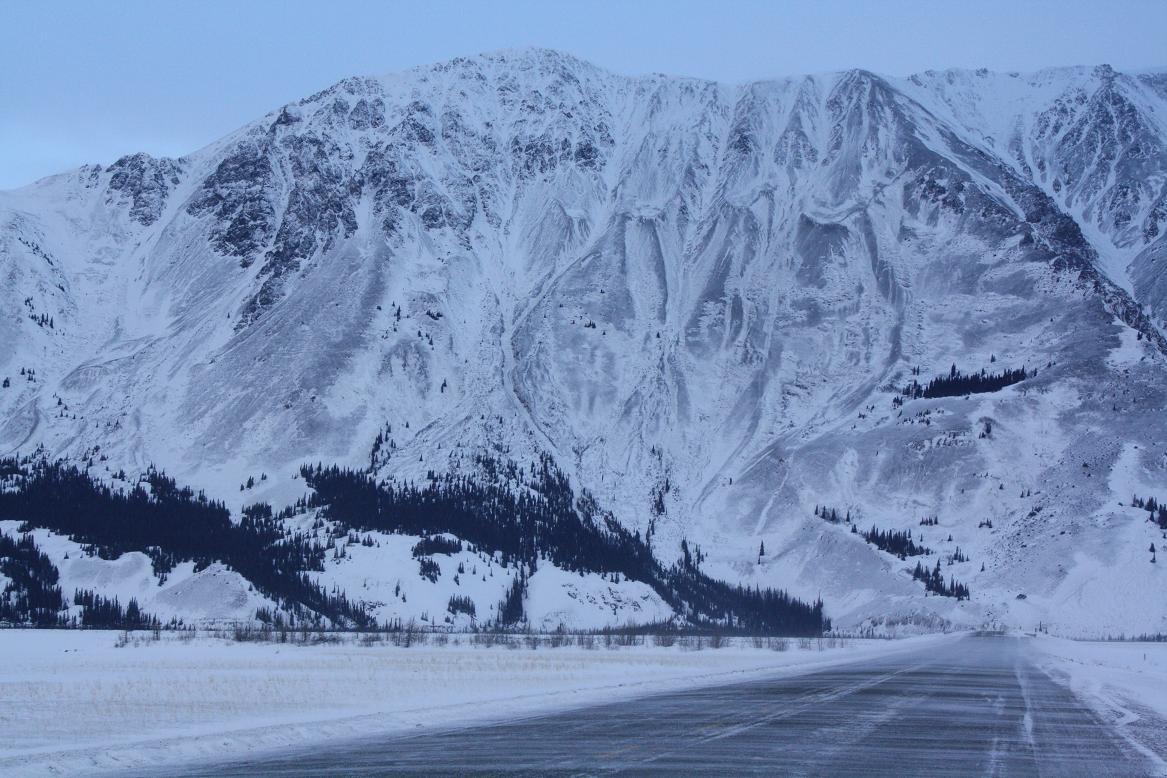
January: Road trip to Anchorage. This is the Alaska Highway near Burwash.

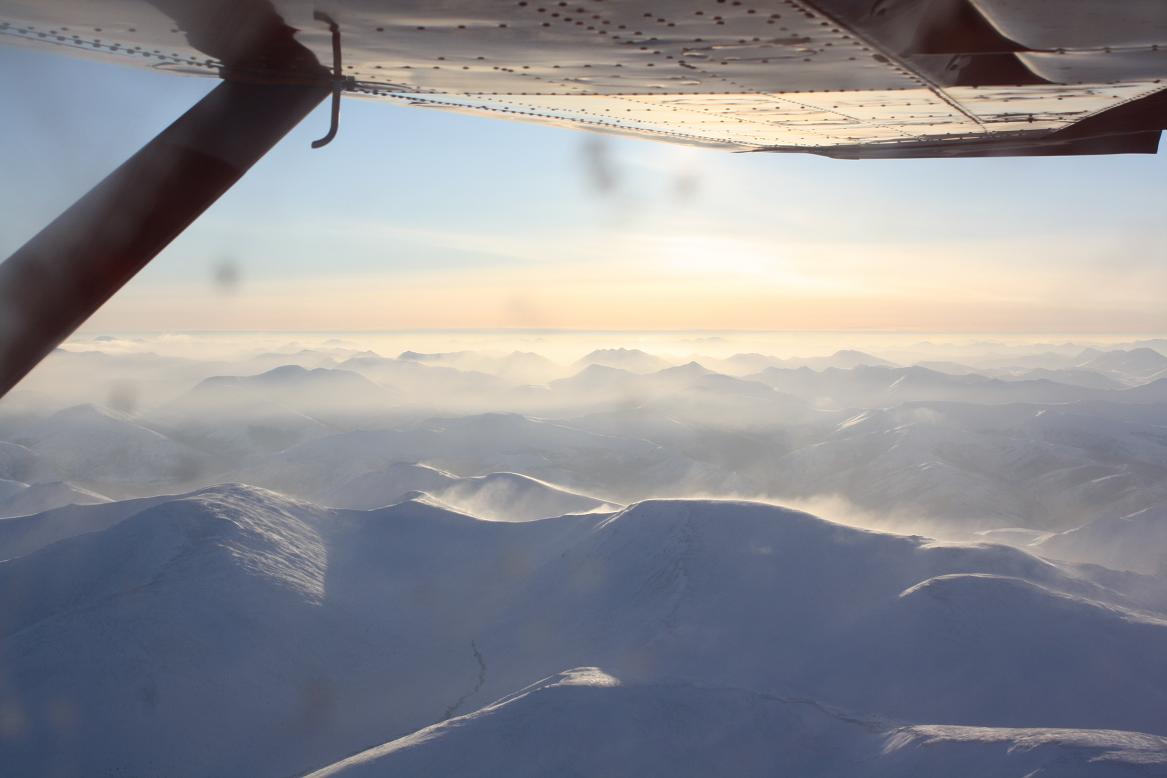
February: I flew into Slaven's Roadhouse, in Yukon-Charley Rivers National Preserve, to work on a volunteer Yukon Quest crew.

Continue Reading »